
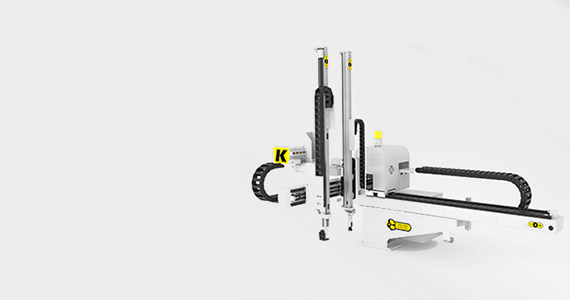
Duty: a manipulator picks sheet, box-shaped or flat-surfaced parts with vacuum cups at the tool end. Cycles are frequent, and pickup and release have to complete within the cycle time.
What the station needs: holding force comes from cup area and vacuum level together, so the two have to be worked out as a pair. With porous parts or a rough surface, raising the vacuum level alone will not help; more flow or more cups is the answer. Release has to be quick, so the circuit needs a blow-off path.
Configuration direction: work out the total holding force from part weight, number of cups and a safety margin, then convert that into the vacuum level and flow required. A single small cup suits V3 or V8; multiple cups or heavier parts call for V16 and above. On a long travel, mount a receiver on the moving arm so line volume does not delay the response.
Watch points: parts carrying dust or oil will pass that dust into the line, so fit filtration between the cup and the pump. When handling thin sheet or glass, limit the holding force and fit pressure monitoring to avoid distortion or crushing. Joints and rotary unions are the usual places where leaks develop and should be checked at intervals.
This page describes a selection method, not a specific project record.