
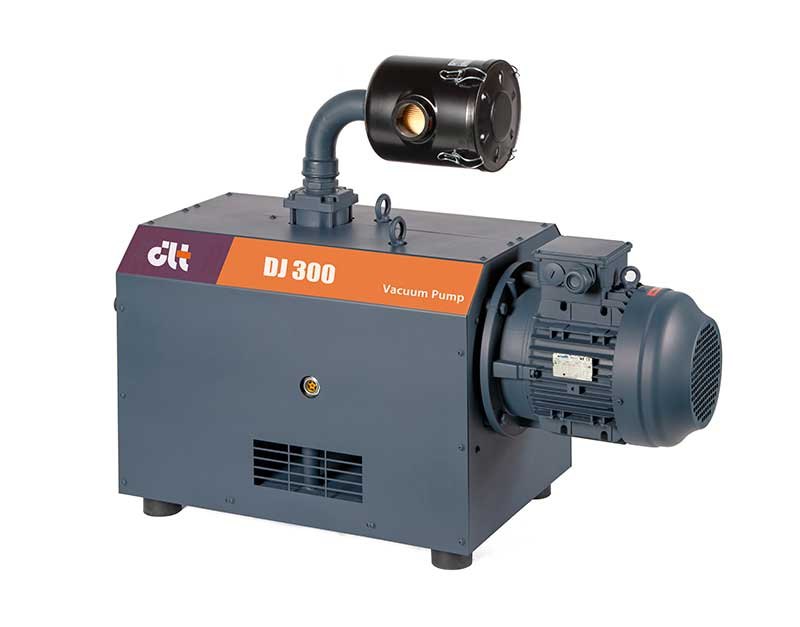
Duty: several stations on one line use vacuum at different times — holding, drawing, clamping. Fitting a pump to each one multiplies the equipment, exhaust points and maintenance, so the vacuum source is usually centralised.
Count first, then size: list the working pressure, gas volume per cycle, cycle time and simultaneity factor for every station. Size the pump on the average system flow and let the receiver cover the peaks; set receiver volume from the gap between peak and average against the permitted pressure swing. Skip this step and the whole system sags at peak demand, with some stations losing their grip.
Piping: size the main on total system flow, and add valves and filtration on the branches. A branch that is too small in bore, or a valve that responds slowly, lets the station that opens first take the flow.
Configuration direction: oil-free rotary vane pumps form such a system directly, with the exhaust piped to a central point. Where station pressures differ widely, split the system into stages — high-vacuum stations separate from low-vacuum ones — so the whole plant does not run at the highest requirement.
This page describes a selection method, not a specific project record.