
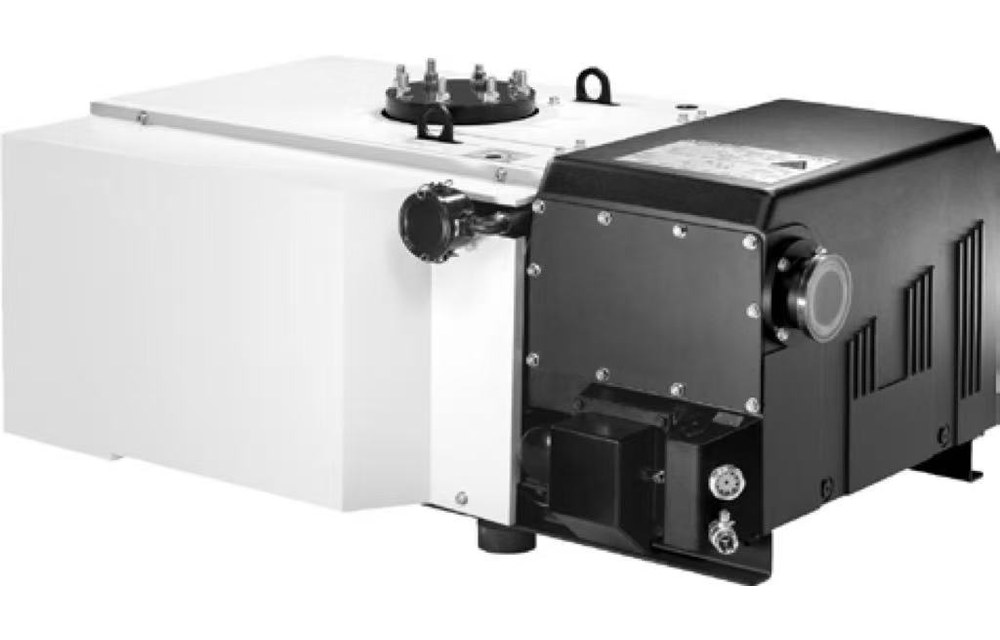
Concentrating the vacuum demand of several stations on one vacuum source cuts the number of units and simplifies exhaust and maintenance, but the working pressures, instantaneous flows and simultaneity factor of each station have to be established first, otherwise pressure sags at peak demand.
The usual arrangement is a pump with a receiver: size the pump on average flow, let the receiver cover the peaks, and set receiver volume from the gap between peak and average against the permitted pressure swing. Size the main pipe on total system flow, and add valves and filtration on the branches.
Oil-free rotary vane pumps can form such a system directly, with the exhaust piped away to a central point. Where station pressures differ widely, split the system into stages — separating high-vacuum from low-vacuum stations — so the whole plant does not run at the highest requirement.