
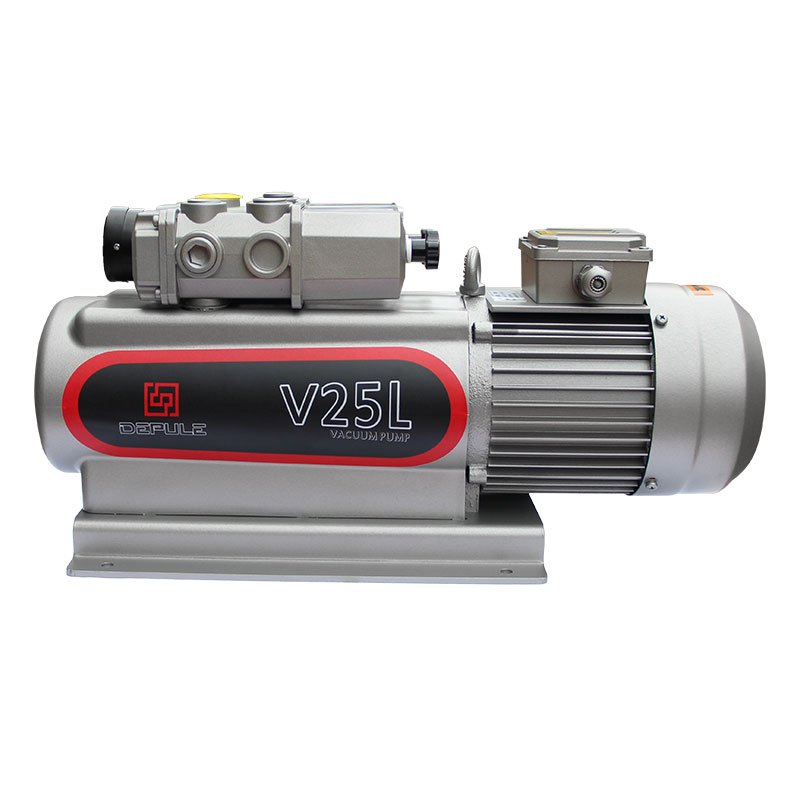
Noise from a rotary vane pump comes mainly from the discharge valve opening and closing, friction between vanes and cylinder wall, and vibration transmitted through the body. The same model on a solid floor and inside a thin sheet-metal machine frame can measure several decibels apart, and the difference is in the installation.
Mounting: fit vibration pads or mounts between the pump and its base, and fix the feet without welding them rigidly to the floor or frame. Inside a machine, leave space for heat and exhaust, and avoid coupling the body directly to large thin panels, which readily become resonating surfaces.
Pipe isolation: transition from rigid pipe to a corrugated or rubber section at inlet and outlet to break the path along which vibration travels. Length follows the bore: too short and it does nothing, too long and it collapses at high flow.
Exhaust: do not aim the discharge at people or at the working position; fit a silencer or duct the exhaust out of the machine or outside. Watch back pressure: an excessively restrictive silencer raises the working vacuum level, so confirm it at selection stage.
Checking the figure: noise is published per model, and within one series the spread between models can reach several decibels. If noise matters, check against the actual model data and ask for it to be measured under agreed conditions, rather than treating a series figure as a guaranteed figure for the machine.
Maintenance link: noise rising with running hours usually points to a blocked filter, vane wear or a change in bearing condition. Logging the noise figure in daily rounds is more useful as a trend than as a single reading.
This page describes a selection method, not a specific project record.