
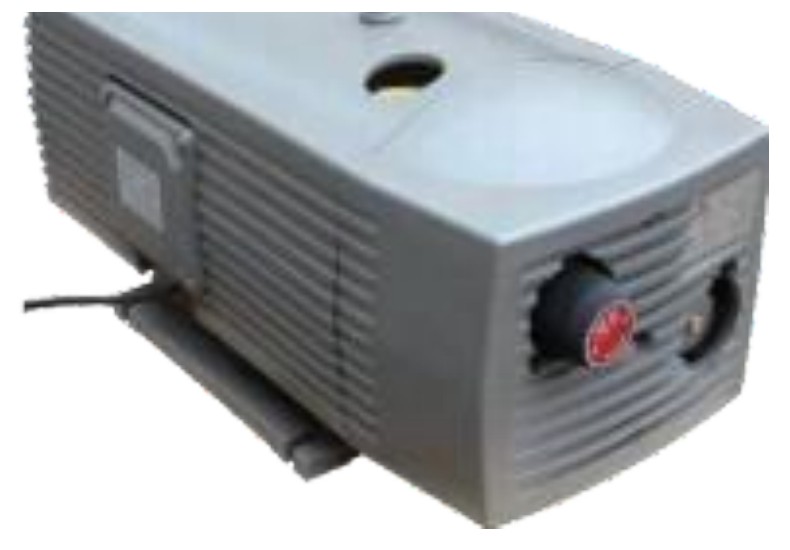
The core of a single-stage oil-free rotary vane pump is a rotor mounted off-centre in the cylinder, a set of vanes sliding in slots in that rotor, and the inlet and discharge passages.
As the rotor turns, centrifugal force throws the vanes out against the cylinder wall, separating the inlet side from the discharge side. The inlet volume grows and draws gas in; as that volume then closes and shrinks, the gas is compressed and passes out through the discharge valve. The whole sequence takes one rotation, which is why this single-stage arrangement suits rough vacuum and holding duty.
How sealing works without oil: through the self-lubricating properties of the vane material and the design of the end clearances and valve plate. Actual pumping speed and ultimate pressure therefore depend on those clearances and on the state of the valve plate. As wear develops, the first signs are usually lost capacity, higher noise and a warmer body rather than sudden failure.
Maintenance: inlet filtration is the chamber’s first line of protection, and a failed element lets dust straight in, accelerating vane and cylinder wear. Vanes and valve plates are wear parts; their replacement interval follows the actual duty — gas handled, running hours, dust conditions — rather than a fixed period.