
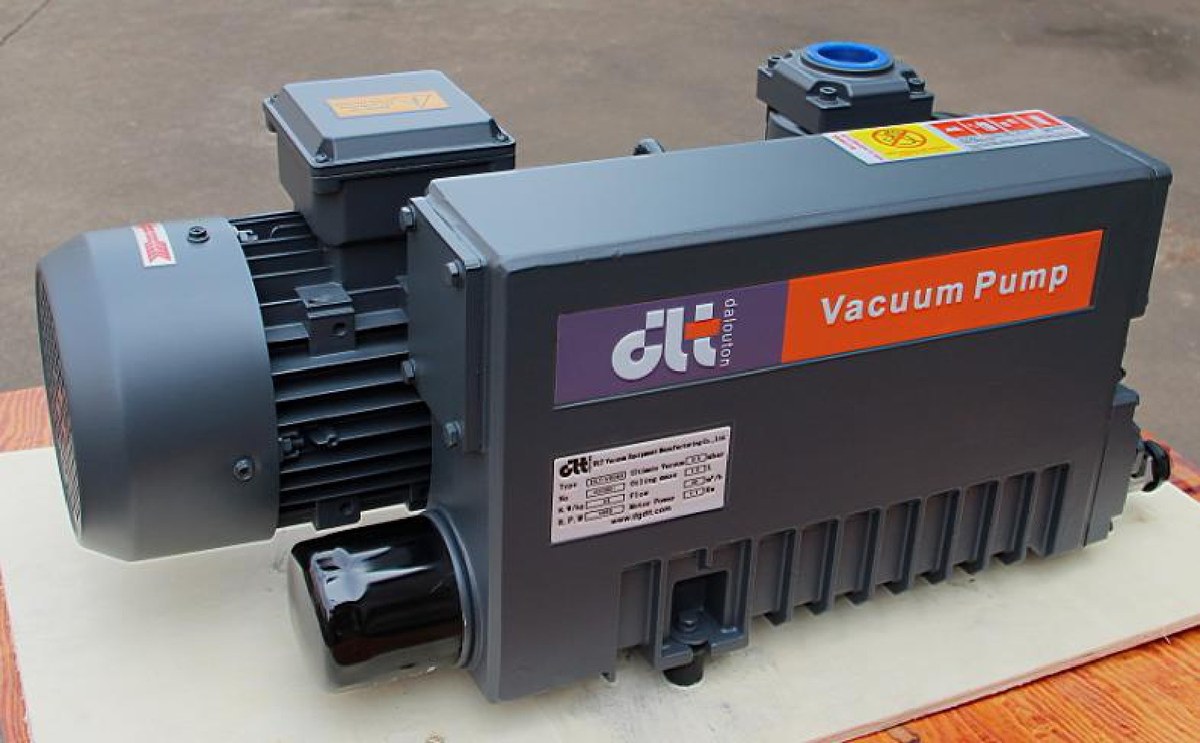
The difference between the two designs is not capacity but exhaust cleanliness and servicing.
An oil-free rotary vane pump exhausts without oil mist, needs no oil changes and produces no waste oil, which suits clean rooms, food and pharmaceutical lines, electronics and inspection equipment, and positions inside a machine where servicing is awkward. The trade-off is that vanes and chamber run dry, so dust and corrosive media matter more and inlet filtration must be right.
An oil-sealed rotary vane pump seals and lubricates with an oil film, tolerates a little moisture or light dust better, and usually reaches a lower ultimate pressure, but it needs scheduled oil changes, waste oil disposal and an exhaust mist separator — more maintenance and higher running cost.
Work through it in order: cleanliness first (may the exhaust carry oil mist), then maintenance capability on site (can oil be changed on schedule), then the gas handled (dust, moisture, corrosives). If the first two point to clean and low-maintenance, choose oil-free. If the medium is difficult and servicing is available, an oil-sealed pump is an option.