
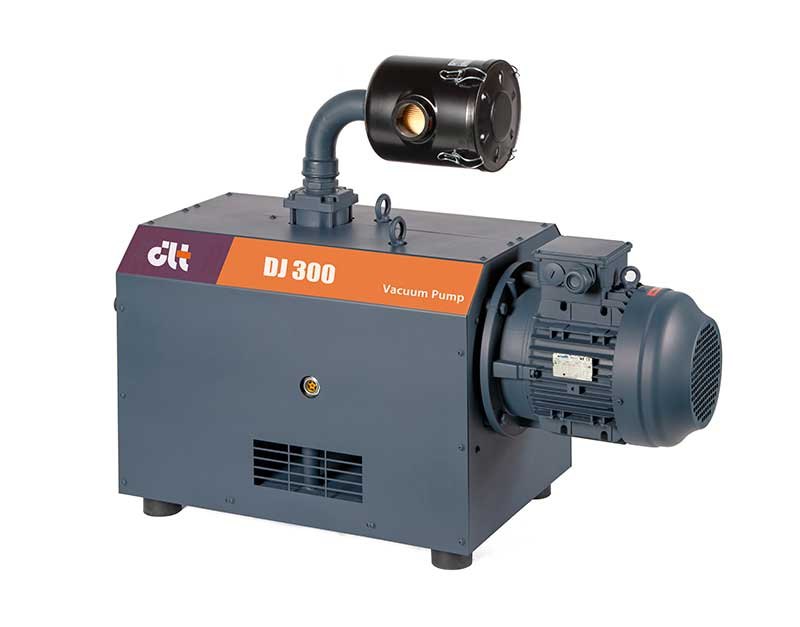
Selection starts with a clear duty description. These six inputs are the minimum; leave one out and the answer drifts.
One — working and ultimate pressure: not simply “a vacuum”, but the pressure at which the process runs, how low the ultimate needs to be, and how much swing is acceptable.
Two — capacity: from the volume to be evacuated and the target pump-down time, or from the process gas load. This is effective pumping speed, so line losses have to be deducted.
Three — the gas handled: air, moisture, solvent vapour, powder, corrosive gas. Each needs different treatment and decides whether condensation, filtration or a material change is required.
Four — duty: continuous or intermittent, hours per day, starts per hour. Continuous running puts heat and bearing temperature in focus.
Five — supply: voltage, phases, frequency. A pump moves different volumes at 50 Hz and 60 Hz, and some models are not suitable for 60 Hz regions, so confirm before ordering.
Six — envelope and connections: outline dimensions, frame type, inlet and exhaust directions, and the noise level permitted.
Write these six down and the range of suitable models is largely fixed. If the information is incomplete we will offer a first proposal on stated assumptions.